

Artificial intelligence has rapidly evolved from a niche research field into a powerful set of tools reshaping how content is created, refined, and delivered. Today, AI content generation is a fundamental component in journalism, marketing, product development, education, and even creative storytelling. But like any transformative technology, it comes with both enormous potential and risks that must be managed thoughtfully.
This guide breaks down what AI can currently do in content creation, where its limitations still matter, common pitfalls businesses should avoid, and why embracing AI—carefully and strategically—can unlock significant advantages. Whether you're a marketer, entrepreneur, educator, or creative professional, AI can become one of your strongest allies when used responsibly.
Understanding AI’s Capabilities in Modern Content Creation
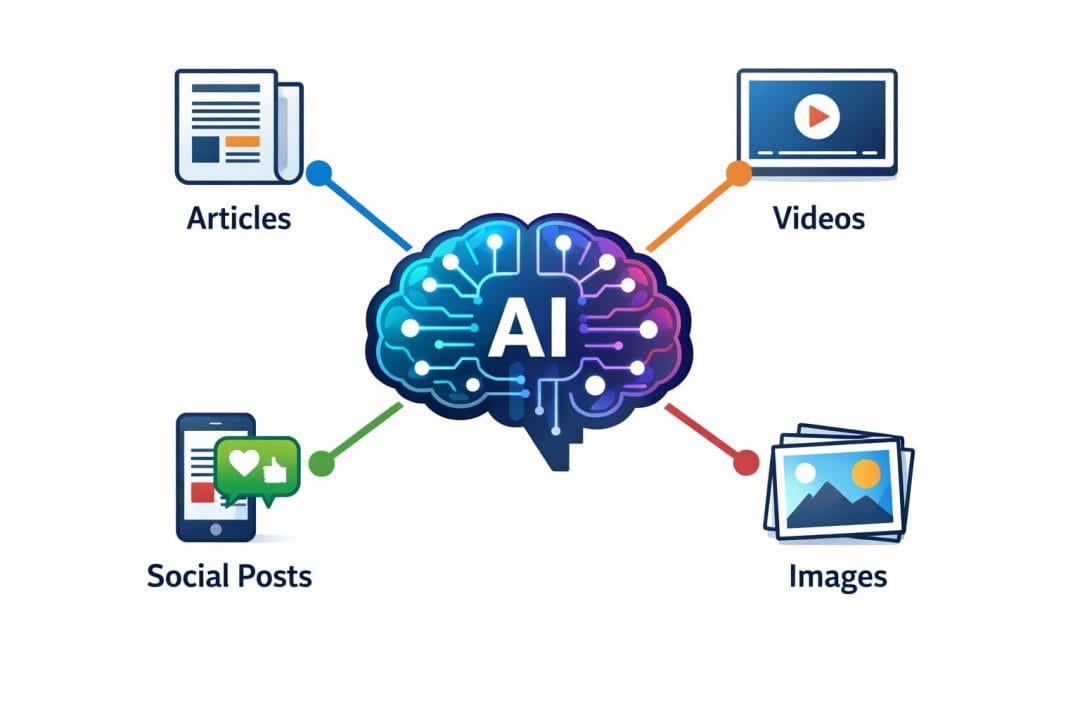
AI's rapid growth didn’t happen overnight. Large language models (LLMs) and multimodal systems have been trained on colossal datasets, allowing them to analyze linguistic patterns, replicate tone, and generate content that often feels remarkably human. For most organizations, this shift represents more than just a new tool—it’s a fundamental change in how content gets planned, created, and published.
How AI Models Generate Human‑Like Content
At the core of AI content generation is pattern recognition. Models learn by analyzing billions of sentences, paragraphs, code snippets, and visuals. Through this training, they gain the ability to:
- Predict text based on context, enabling smooth and grammatically coherent outputs.
- Adapt tone, style, and complexity to match a given audience or brand voice.
- Handle long‑form content, from detailed reports to scripts and email sequences.
"AI does not truly understand content—it recognizes and reproduces patterns. Human insight remains essential to ensure meaning, nuance, and accuracy."
Supporting Research, Ideation, and Drafting
For many professionals, AI acts as a research assistant and idea generator. It synthesizes information at high speed, producing outlines, keyword suggestions, summaries, and comparative analyses. This can dramatically reduce the initial effort involved in complex projects such as whitepapers or curriculum building.
Industries and Roles Benefiting Most
AI content tools have permeated nearly every sector, including:
- Marketing and SEO: Faster topic research, content calendars, and optimized drafts.
- Customer Support: Intelligent chatbots, email reply suggestions, and knowledge base maintenance.
- Publishing and Journalism: Draft generation, fact summaries, and data‑driven reporting support.
- Education: Personalized learning material and reading comprehension tools.
- Product Teams: Documentation, feature explanations, and onboarding flows.
AI amplifies productivity when used strategically. It accelerates ideation, supports research, and helps teams create more polished drafts in less time—without replacing the need for human expertise.
Common Pitfalls to Avoid When Using AI
Despite its strengths, AI is not a magical solution, and misusing it can undermine credibility, brand trust, and content quality. Organizations adopting AI must be aware of both technical limitations and ethical responsibilities.
1. Over‑Reliance Leading to Generic or Inaccurate Content
One of the most common mistakes is assuming AI can produce final‑quality content without human involvement. AI tends to generate text that is statistically common, sometimes resulting in:
- Vague or overly general statements
- Missing nuance or real‑world insight
- Overused phrasing or repetitive patterns
2. Skipping Human Editing and Fact‑Checking
Even advanced AI systems can hallucinate fabricated facts, sources, or statistics. A responsible workflow requires that every AI‑generated piece be reviewed, edited, and validated by a human expert.
3. Ethical Risks: Plagiarism and Misinformation
While AI does not intentionally plagiarize, it can unintentionally reproduce phrases or structures similar to existing content. Similarly, without guardrails, it may generate information that sounds correct but is not. Ethical AI use requires:
- Clear internal guidelines for content review
- Tools for detecting overlap with existing sources
- Editorial oversight on sensitive or regulated topics
AI should never operate without human oversight. It’s a drafting tool—not a replacement for subject matter expertise, accuracy, or ethical judgment.
The Benefits of Embracing AI in Your Workflow

When implemented thoughtfully, AI brings advantages that compound over time. These benefits don’t simply help teams produce more—they help teams produce better, smarter, and more strategically aligned content across channels.
Significant Time Savings
Drafting is often the slowest part of content creation. AI accelerates:
- Brainstorming topics and angles
- Structuring outlines and first drafts
- Summarizing research materials
- Rewriting or expanding existing content
Teams report an average of 30–60% time savings when AI is integrated into the early stages of their workflow.
Enhanced Creativity Through Brainstorming
Rather than replacing creativity, AI often enhances it. By generating unexpected ideas, alternative angles, or narrative variations, AI can help creators break out of familiar patterns and explore new directions.
Scalability for Growing Teams
For rapidly expanding companies, content needs often outpace staff capacity. AI enables:
- Faster content pipelines
- Consistent brand voice at scale
- Support for multi‑format content across blogs, email, video scripts, and social media
AI-driven workflows unlock dramatic gains in speed, consistency, and creative flexibility—making them essential for modern, fast‑moving teams.
Balancing Human Expertise with AI Efficiency
The best AI‑assisted content isn’t fully automated. It’s the result of a balanced partnership between machine-generated insights and human judgment. Successful teams treat AI as a collaborator, not a replacement.
Why Human Oversight Is Essential
AI cannot understand context, cultural nuance, strategic positioning, or brand identity as deeply as humans can. Editors, strategists, and subject matter experts ensure that content remains:
- Accurate
- On-brand
- Uniquely valuable
- Ethically responsible
Creating a Balanced Workflow
A healthy AI-human workflow usually includes:
- Planning and outlining with AI support
- Draft creation using AI-generated content
- Human editing and fact-checking
- Final polish guided by brand voice and expertise
This approach ensures the efficiency of AI without sacrificing the originality and integrity that only humans can bring.
AI becomes most powerful when paired with human creativity, critical thinking, and contextual knowledge.
Ready to Integrate AI Into Your Content Strategy?
AI content generation is evolving quickly—and teams that embrace it now will have a competitive edge as the landscape continues to shift. Whether you're looking to streamline your production pipeline, enhance creativity, or scale your output, AI offers powerful tools to help you get there.
Explore platforms, test workflows, and start integrating AI into your content strategy step by step. The key is not to replace human expertise but to enhance it—unlocking new levels of efficiency and creative potential.
Let's Connect, We Can Help
|